Bouldering pads have changed the
way people approach hard gritstone
routes. What used to be a bold solo,
sometimes practised on a top-rope,
is now more often done ground-up
above a stack of pads with spotters
gathered around. This has led to a
significant increase in the number of
ascents some routes get. Bold climbs
that used to get two or three leads/
solos a year can now receive ten
ascents in an afternoon when the
conditions (and number of pads and
spotters) are right.
Highball Grades
This change in approach has led to a
debate as to which is the correct style,
and what grade is appropriate. This is
a routes book so, in general, we have
given route grades. For routes which
tend to see a lot of bouldering style
'highball' ascents, we have mentioned
the accepted Font grade in the route
description. In other places, shorter
routes, which are virtually exclusively
soloed or bouldered above pads,
are given straight Font grades (see
previous page for a conversion table
for Font grades).
As a further complication, there is
also the 'snowball' grade. After heavy
snow huge drifts build up under the
edges and some very bold routes
become much more amenable
challenges with levelled out snow
platforms covered with bouldering
pads underneath them. There are
some routes which only get highball
ascents under these conditions
and this is also mentioned in the
descriptions.
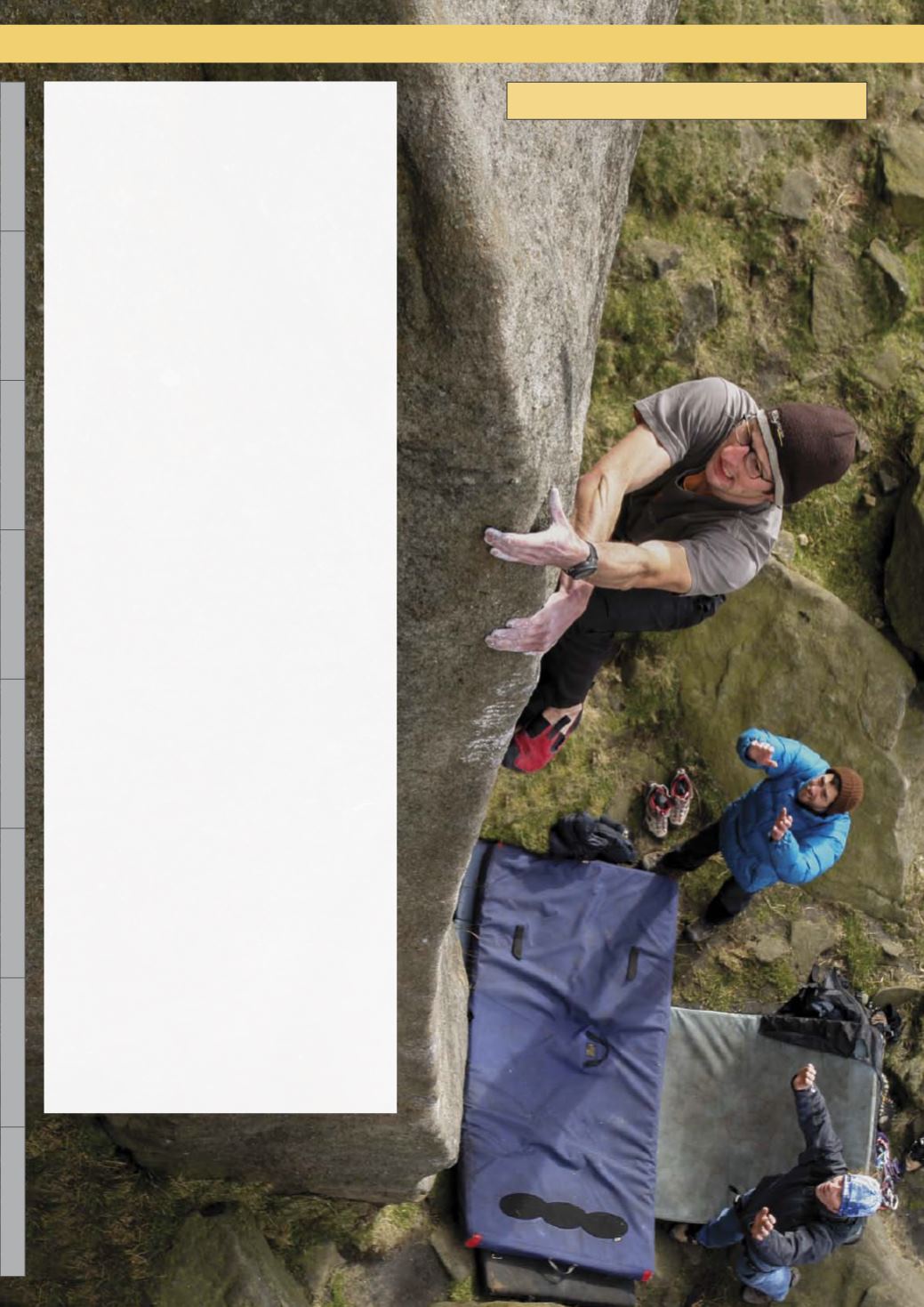
Olivier Coenen 'highballing'
Ulysses Bow
(E6/
f6C
) -
page
191
- above pads and two spotters. Photo: David Bond
Sheffield Area
Ladybower Area
Stanage
BurbageValley
Millstone Area
Derwent Edges
Chatsworth Area
Southern Crags
32
Eastern Grit Climbing
Highballs or Routes?


